E-Squared Magazine
Art + Science | Culture
strand_alt

Saturday, August 22nd, 2015

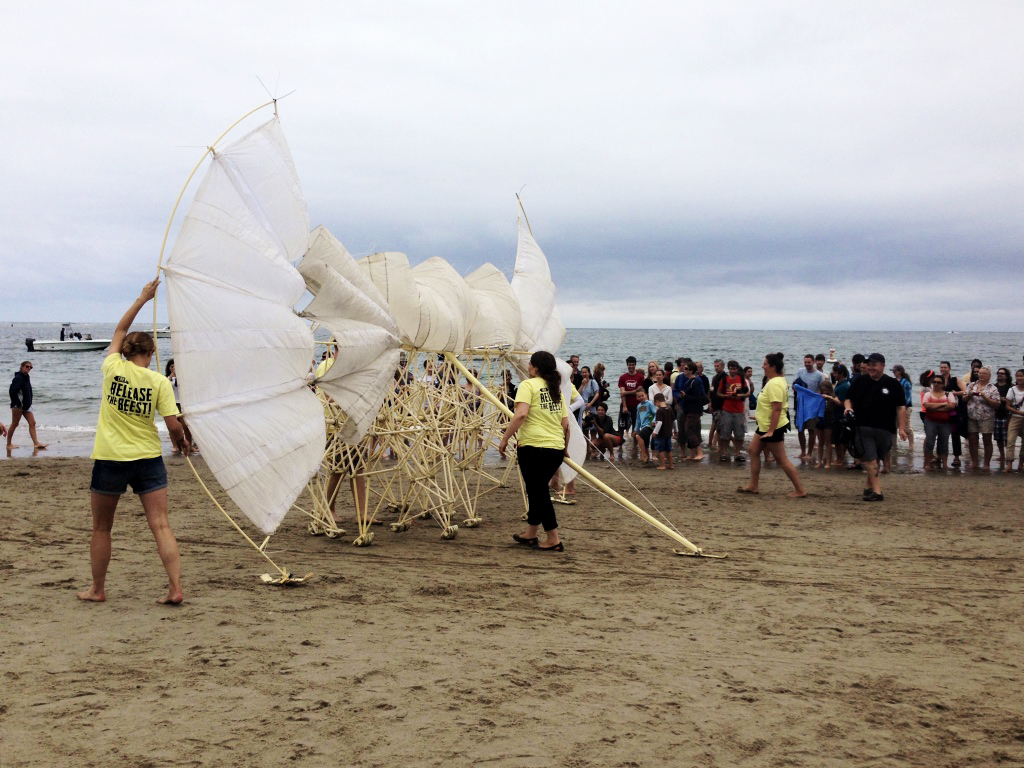
Strandbeest

thumb_img_2347_1024
Photo Credit: E. Dustman

A road trip turned camping trip turned day trip to Crane Beach to see Dutch artist + physicist Theo Jansen’s Strandbeest (Dutch: strand=beach; beest=beast).

Well.
Worth.
It.

Magnificent they are with an early invented appearance and articulated dream-like movements. But, what are they? Jansen’s Strandbeests are sculptures but they aren’t just any sculptures…they are kinetic sculptures that move, appearing as creatures that possess a life of their own.

With these “beach animals,” Jansen sets out to create life forms – “I want to put new forms of life on the beaches and they should survive on their own in the future. Learning to live on their own.” His skeletal-like sculptures do not require food or any sort of power to be harvested by man, but are instead, powered by the wind. It is through carefully calculated articulations and captured wind in wing-like sails, that the beasts move. Now, that’s innovative.

I feel very fortunate to live in New England and to have present for their first debut in the U.S.. It was truly a magical sight to see along the edges of Crane Beach of Ipswich, Massachusetts that will forever be engrained in my memory.

Friday, July 10th, 2015

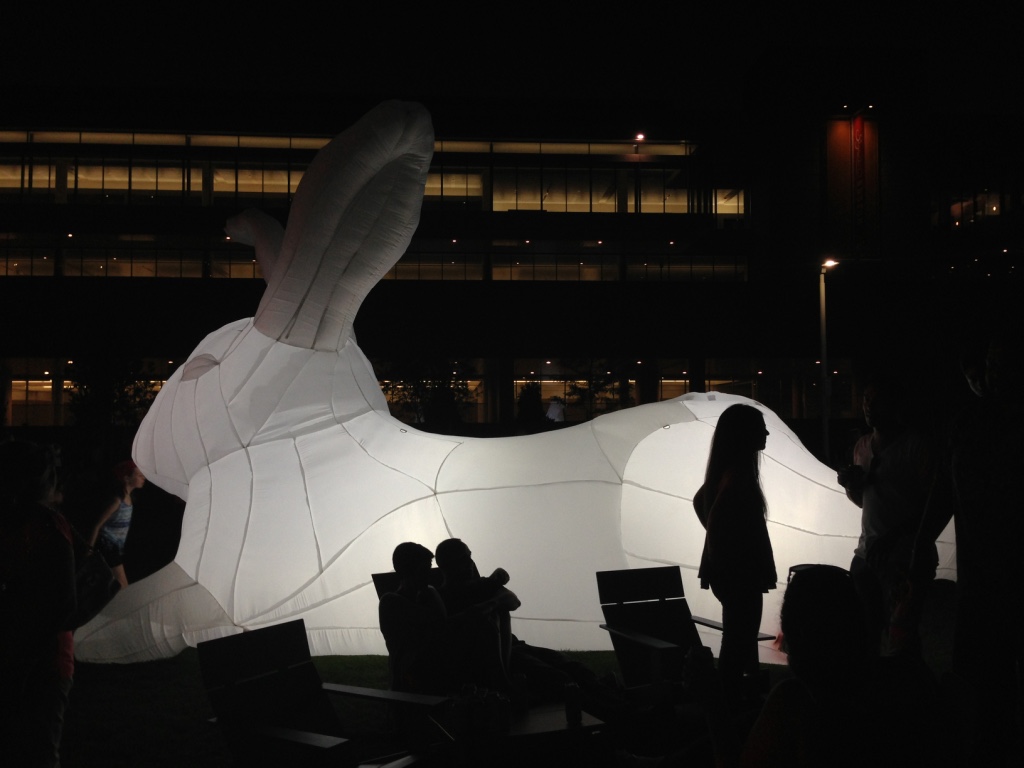
Bunnies @ the Lawn on D

thumb_img_1068_1024
Photo Credit: E. Dustman

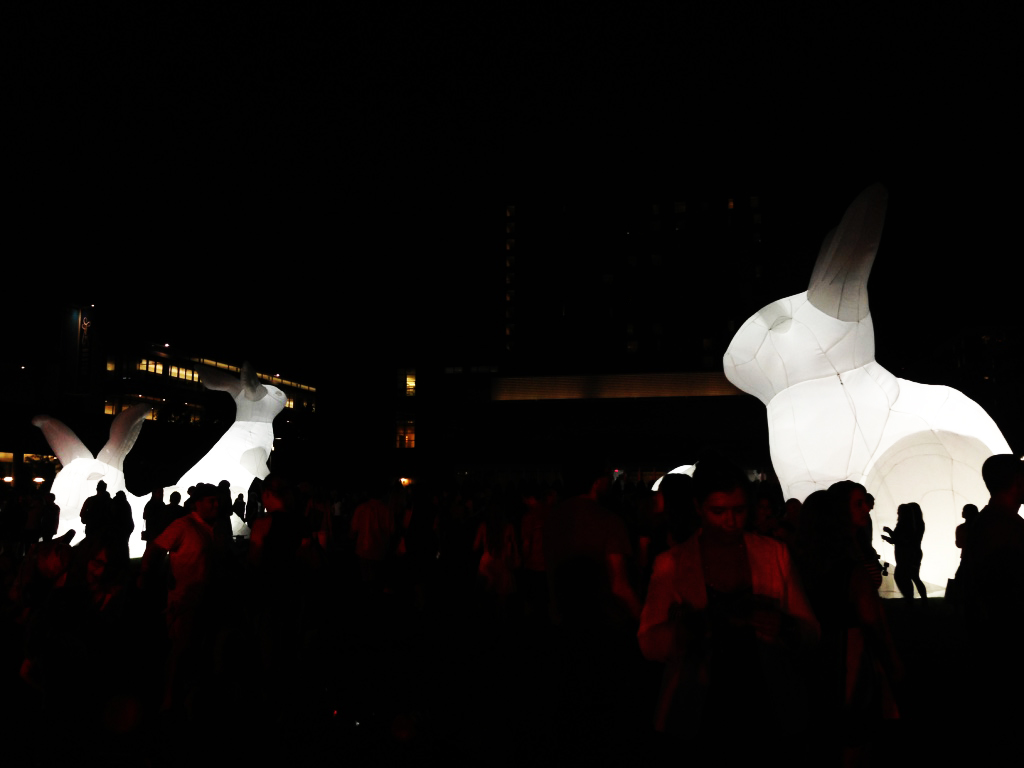
You must go see the pop-up display on Boston’s Lawn on D. Cleverly titled Intrude, the installation evokes a sense of wonderment, play, and disruption of space. Designed by Australian artist Amanda Parer and at two-stories high, it is undeniably unavoidable, but only in the best kind of way.

Did I mention that the bunnies are also inflatable and light up? Yeah. Just go see it.

“I like people have a sense of awe and wonder when they first approach the work” – Amanda Parer

The sculptures are taken down each night, but you can see Intrude for free from 5 to 9 p.m. Thursday, July 9; from noon to 10 p.m. Friday and Saturday, July 10 and 11; and, from noon to 8 p.m. Sunday, July 12.

Thursday, April 9th, 2015

Bridging the Art + Science Gap


Photo Credit: E. Dustman

Today, I took the train all the way up to Cambridge, Massachusetts to study taxidermy turtles. You probably don’t hear that everyday since you’re not running around in herpetology circles, but I have been working on creating The Turtles of Rhode Island, an educational poster for the Roger Williams Park Zoo. My project isn’t necessarily innovative to the scientific world, but it is intended to be beautiful – to catch one’s eye – and to then to be informative after visually ensnaring said person. My mission is similar to that of what Audubon set out to do. Put simply, it is a classic fusion of science + art with conservation at heart. Everyone should start with the basics, right?

After months of rendering Rhode Island’s seven turtle species in graphite, I was left largely unsatisfied with my results. Everyone seemed to be satisfied with my drawings except for me. But why? Besides being a perfectionist, I am also a turtle biologist – I have spent 10+ years working with most of Rhode Island’s species firsthand, so I know most of the species very intimately. To me, my drawings were inaccurate, in fact, they weren’t even close to being representative of the turtles. I mean, I have looked deeply into the eyes of these turtles. I know all about their skin patterns. Their scutes. Their tiny toes. Barbels. Movements. Even, species specific behaviors which ultimately translates to turtle personalities (yes, I said it!).

At the core of it all, it’s about vision versus final product. I had a glorious vision of my turtles that I was not fulfilling. So, in my struggle, I reached out to 50+ scientists and finally settled on the Museum of Comparative Zoology (MCZ). There, they granted me special permissions to visit and study the taxidermy turtles of the herpetology lab. So, here I am at Harvard’s MCZ. While I am not legally allowed to share the photographs of the turtles (I had to sign legal waivers for each turtle), I will tell you that they are the most stunning taxidermy turtles I have ever seen. To top it off, they were created by a resident scientist, George Nelson, in the early 1900’s. Amazingly, at over 100 years of age, they remain most beautifully intact.

Although now long past, I am deeming George Nelson a scientist and an artist, specifically, a taxidermy artist. I mean, who knows what else George did in his creative life. What I do know is that he was certainly skilled at preparing and preserving turtles in life-like form for myself and others to learn from over a century later. And, that in itself, this educational preservation, is an incredibly valuable part of the process, if you ask me.
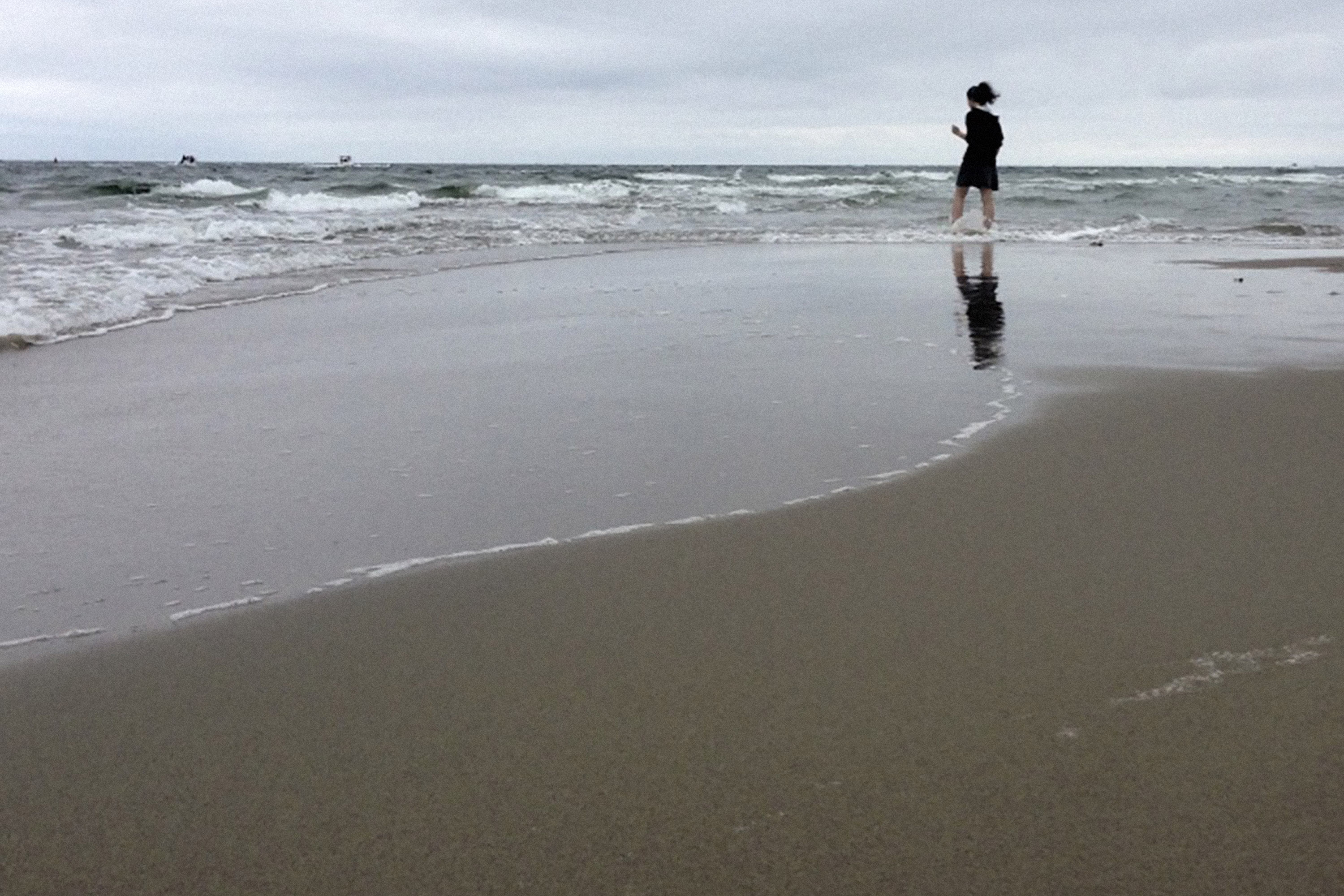
Monday, June 2nd, 2014

From Roadkill to Rebirth: Teaching Youth to Protect Our Wildlife

In an effort to bring hope from tragic circumstances, each year I collect eggs from a roadkill turtles and hatch them. It is always an emotional journey, one that transforms loss into new beginnings.

What’s even better? Involving youth in this experience. Teaching our youth about hatching, conservation, and our natural environments is crucial for shaping a future where empathy and stewardship lead the way. Through this experience, young minds learn about the delicate balance of ecosystems and the impact we have on species that share our world.

By empowering future generations with this hands-on knowledge, we’re fostering a deep appreciation for the natural world—one hatchling at a time. Together, may acts like this inspire curiosity, respect, and love for our environment so that future leaders grow up knowing they have the power to make a difference. 🌿💚

What stories from nature have shaped your passion for the environment?

[📸 from release day]

IMG_1189

IMG_4437


Sunday, March 9th, 2014

From Hear to Ear

19-celeste_boursier-mougenot-2

Photo Credits: Peabody Essex Museum: pem.org

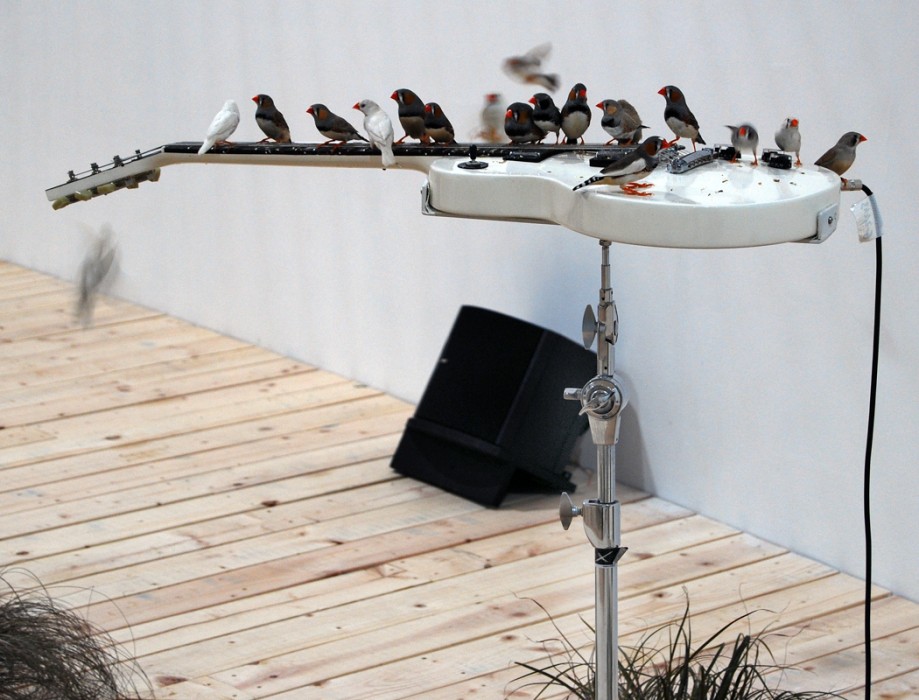
This Saturday, I invited my friends to join me at the Peabody Essex Museum to experience an installation by modern French artist Céleste Boursier-Mougenot. The exhibit, From Hear to Ear, fuses two spheres – both the auditory + visual by producing sound created by a flock of live birds that are introduced into an acoustic environment. That is, an acoustic environment that you get to walk around in as 70+ zebra finches fly around, perching onto amplified instruments. The result? A visual and sound experience.

Here’s a little more information in case you’re wondering just how exactly this works. As you enter an entirely white room, the door is closed and your experience begins. As you walk around the room, the finches explore the environment, landing on various string instruments, ultimately sculpting the space into an ambient and melodic soundscape. The space is constantly changing too as the birds move in relation to people’s movements, creating a truly unique and non-replicable experience with each visit. None to worry either, as the finches are under very good care with a veterinarian on staff observing/checking them daily.

From Hear to Ear is a profoundly impressionable exhibit that colors outside the standard lines of normalcy, challenging us to think about how we perceive, create, and interact with our environments. I highly recommend seeing Boursier-Mougenot’s innovatively designed installation while it’s still on display.

From Hear to Ear is on view at the Peabody Essex Museum from January 18 to April 13, 2014.

Saturday, February 22nd, 2014

Art + Science: Expressing Emotions Through Color

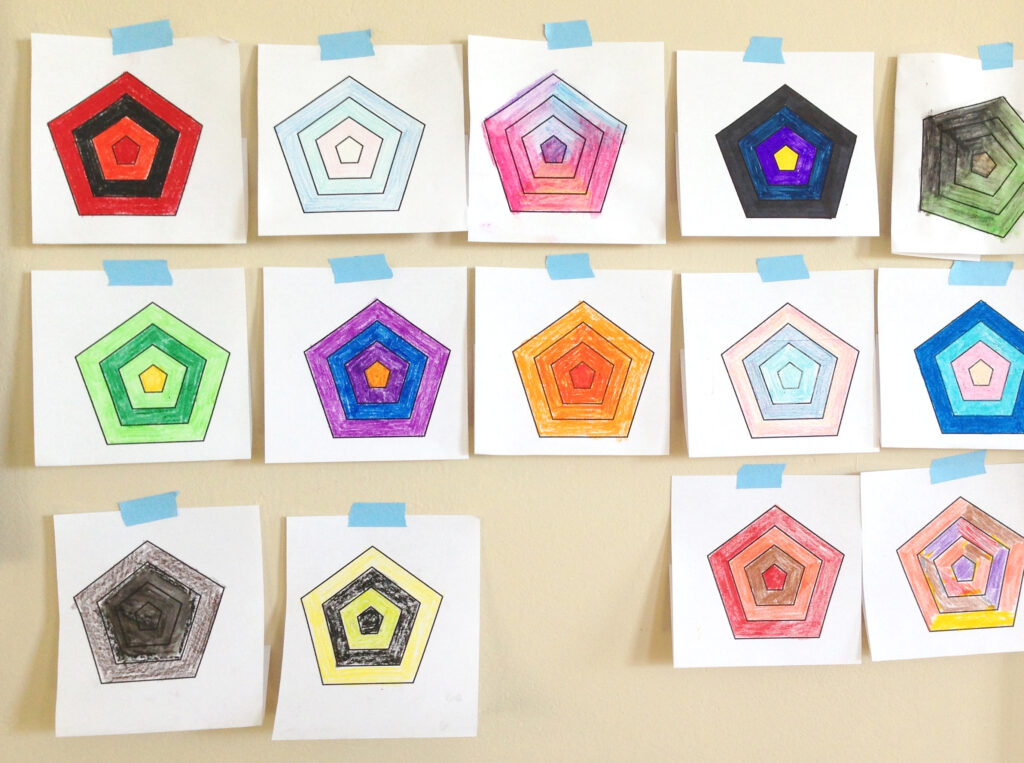
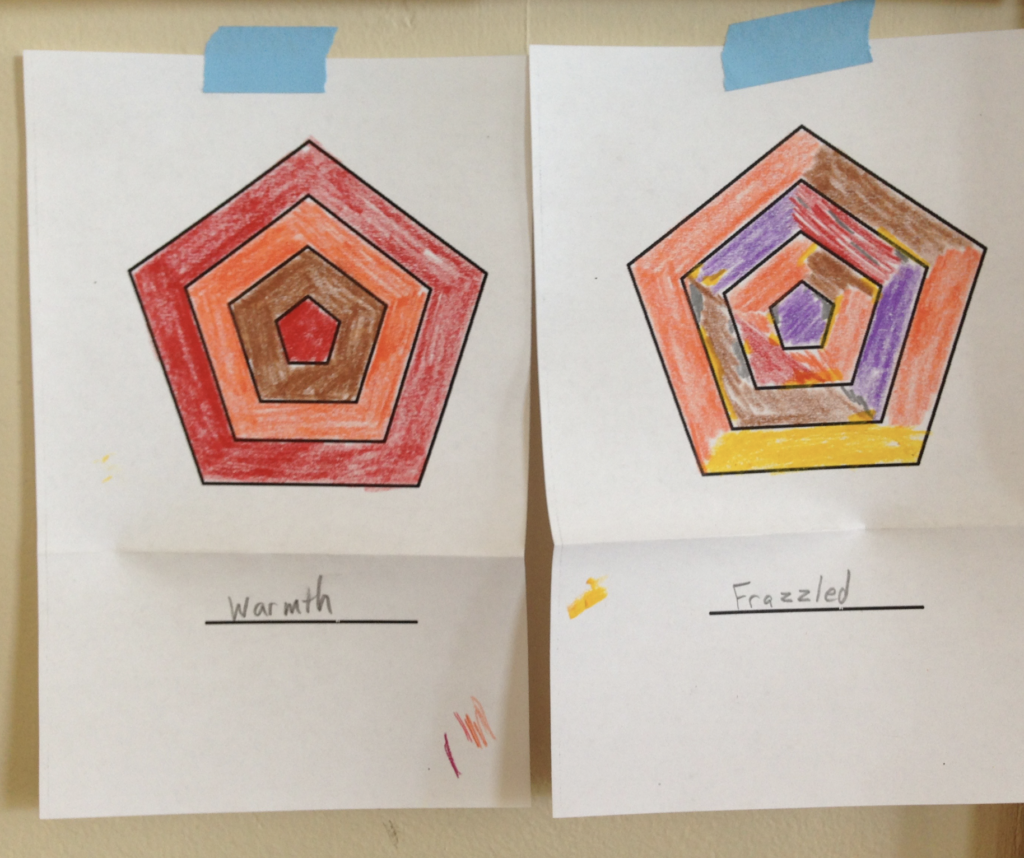
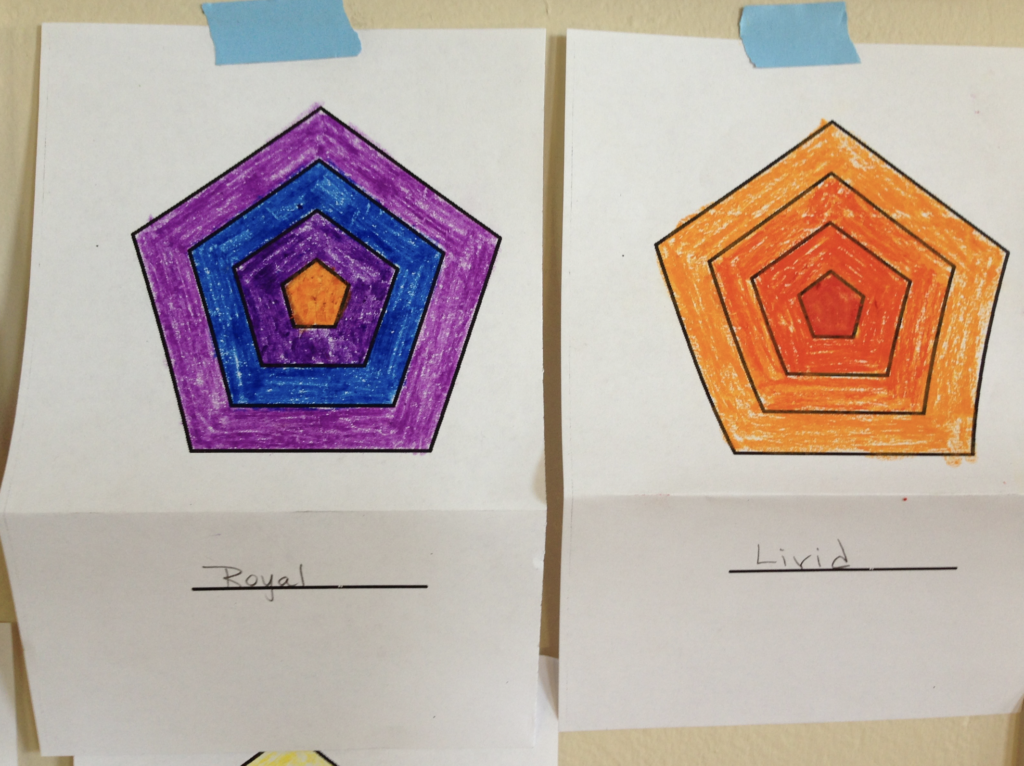
In my recent workshop, we explored the intersection of art and emotion, diving into the power of color to convey feelings. Participants were given a simple yet profound task: choose a color that embodies a particular emotion, color in their piece, and then write the emotion underneath, folding it out of sight. These colorful expressions were displayed on the wall, each a visual mystery for others to interpret.

This interactive exhibit encouraged participants to reflect on the universal language of color and its ability to evoke empathy. As others walked by, they were challenged to guess what emotion each piece was trying to communicate—what does a deep blue say to you? Does that bright yellow shout joy, or is there something more complex going on in that particular hue?

Watching people engage with the wall, share their interpretations, and discuss their experiences was a powerful reminder of how intertwined art and science are in understanding ourselves and each other. Art invites us to see; science helps us explain—and together, they help us feel. 

Which color speaks to your current emotion? 🎨 💬

[📸 of participants colored emotions; emotion revealed below]

IMG_3210 Screenshot 2024-10-05 at 10.57.10 AM Screenshot 2024-10-05 at 10.57.18 AM


Saturday, November 16th, 2013

Botanical Inspiration

thumb_img_1974_1024

Photo Credit: E. Dustman

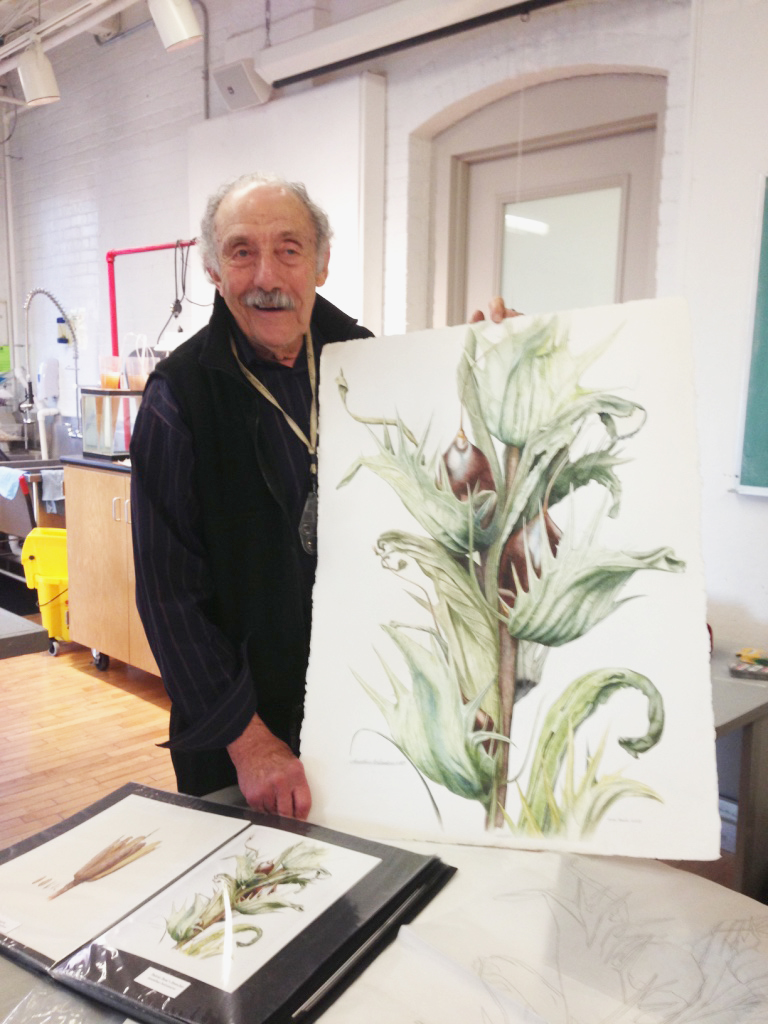
This weekend, I had the privilege of attending a botanical illustration workshop hosted by Rhode Island School of Design. The work shop was instructed by Dr. Dick Rauh and while I learned a lot about his artistic process (which often goes unshared and is lost), what interested me more was his life trajectory. Personally inspired, I would like to share with you a little bit about Dick Rauh.

In the early eighties, Dick Rauh completed a certificate program in Botanical Art at the New York Botanical Garden.
For some time, he illustrated for various scientists, but then felt as though he did not know enough about the science of plants. So, what did he do? He decided to pursue a graduate degree in Plant Science from the City University of New York, completing his doctorate in 2001!

Now, in his retired life, Rauh watercolors enlarged versions of plants to depict their beauty and architecture. His paintings have won gold medals at Royal Horticultural Society Flower Shows and have also been included in the Hunt Collection at Carnegie-Mellon University. Others are in the collections of the New York State Museum and the Lindley Library in London. How impressive is that?

My point here is this: be inspired by those around you. Listen to their story. Learn about their process. Meet Dick Rauh, an artist who first illustrated for botanists and then later pursued a doctorate in plant science to gain more knowledge. His works are impressive, even more so in person, but so is his story. I feel privileged to have met Dick Rauh as he is an exemplary example of the art/sci fusion.

Category Archives: Uncategorized

Strandbeest

Photo Credit: E. Dustman A road trip turned camping trip turned day trip to Crane Beach to see Dutch artist + physicist Theo Jansen’s Strandbeest (Dutch: strand=beach; beest=beast). Well. Worth. It. Magnificent they are with an early invented appearance and articulated dream-like movements. But, what are they? Jansen’s Strandbeests are sculptures but they aren’t just any sculptures…they are kinetic sculptures […]

Bunnies @ the Lawn on D

Photo Credit: E. Dustman You must go see the pop-up display on Boston’s Lawn on D. Cleverly titled Intrude, the installation evokes a sense of wonderment, play, and disruption of space. Designed by Australian artist Amanda Parer and at two-stories high, it is undeniably unavoidable, but only in the best kind of way. Did I mention that the bunnies […]

Bridging the Art + Science Gap

Photo Credit: E. Dustman Today, I took the train all the way up to Cambridge, Massachusetts to study taxidermy turtles. You probably don’t hear that everyday since you’re not running around in herpetology circles, but I have been working on creating The Turtles of Rhode Island, an educational poster for the Roger Williams Park Zoo. My project isn’t […]

From Roadkill to Rebirth: Teaching Youth to Protect Our Wildlife

In an effort to bring hope from tragic circumstances, each year I collect eggs from a roadkill turtles and hatch them. It is always an emotional journey, one that transforms loss into new beginnings. What’s even better? Involving youth in this experience. Teaching our youth about hatching, conservation, and our natural environments is crucial for shaping […]

From Hear to Ear

Photo Credits: Peabody Essex Museum: pem.org This Saturday, I invited my friends to join me at the Peabody Essex Museum to experience an installation by modern French artist Céleste Boursier-Mougenot. The exhibit, From Hear to Ear, fuses two spheres – both the auditory + visual by producing sound created by a flock of live birds that are introduced into an acoustic environment. That is, […]

Art + Science: Expressing Emotions Through Color

In my recent workshop, we explored the intersection of art and emotion, diving into the power of color to convey feelings. Participants were given a simple yet profound task: choose a color that embodies a particular emotion, color in their piece, and then write the emotion underneath, folding it out of sight. These colorful expressions were […]

Botanical Inspiration

Photo Credit: E. Dustman This weekend, I had the privilege of attending a botanical illustration workshop hosted by Rhode Island School of Design. The work shop was instructed by Dr. Dick Rauh and while I learned a lot about his artistic process (which often goes unshared and is lost), what interested me more was his life trajectory. Personally inspired, […]