E-Squared Magazine
Art + Science | Culture
Screenshot 2024-09-06 at 3.25.16 PM

Monday, September 2nd, 2024

PAINT LOUIS: Breaking Down Barriers

This past weekend marked one of my favorite events of the year—Paint Louis! 

Paint Louis is one of the largest graffiti gatherings in the world. This year, artists traveled from as far as Germany, Canada, and Australia to leave their mark on the St. Louis flood wall. The event boasts the Guinness World Record for the “longest mural in the world,” stretching nearly two miles of vibrant, collaborative artwork.

Nearly 500 artists painted the wall this year, celebrating not just their personal creativity but also the broader culture of street art. Street art is more than just an aesthetic though—it’s a form of public expression that breaks down barriers, making art accessible to everyone. It adds life to urban spaces, turning concrete and brick into open canvases for social commentary, personal stories, and community pride.

The beauty of Paint Louis lies in the diversity it showcases, bringing together artists from different cultures, styles, and backgrounds to share a visual dialogue that enriches the local community. My favorite stretch of the wall this year had to be the panels created by the all-women crew, Few and Far Women (peep the yellow sections!). Their work stands out not just for its striking colors but for the powerful message of female representation in a historically male-dominated art form.

This event embodies the spirit of street art—bold, collaborative, and alive with energy—and as always, I look forward to what next year’s artists have in store!

Tuesday, August 6th, 2024

On Automation & Filling Gaps

The Great Depression marked a time of widespread hysteria about how automation would lead to mass unemployment. Uhh, sound similar to the headlines today?

In the 1930s, American newspapers started publishing about robots and automation. Mass hysteria spread when papers like the Ogden Standard Examiner spread mis/disinformation about a robot named Alpha shooting his inventor with the sensationalist headline: “Shot by the Monster of His Own Creation.” According to the paper, the two-ton robot developed a “mind of its own” and wounded the inventor who feared it would “get him” someday.

Even the 1934 issue of Time magazine described Alpha as a “monster” to be feared:

“Last week Alpha, the robot, made its first public appearance in the U. S.. One of the most ingenious automatons ever contrived by man, a grim and gleaming monster 6 ft. 4 in. tall, the robot was brought to Manhattan by its owner-inventor-impresario, Professor Harry May of London, and installed on the fifth floor of R. H. Macy & Co.’s department store. Encased from head to foot in chromium-plated steel armor, Alpha sat on a specially constructed dais with its cumbrous feet securely bolted to the floor, stared impassively over the knot of newshawks and store officials waiting for the first demonstration. The creature had a great sullen slit of a mouth, vast protuberant eyes, shaggy curls of rolled metal. In one mailed fist Alpha clutched a revolver. Once it fired its pistol without warning, blasting the skin off the professor’s arm from wrist to elbow. Another time it lowered its arm unexpectedly, struck an assistant on the shoulder, bruised him so badly that he was hospitalized.”

Of course, the series of events did not quite play out that way, and a more accurate story was published in (very) few papers about the pistol having accidentally discharged, simply burning the inventor’s hand. As wildly exaggerated stories spread, so did mass hysteria. Clearly, the bold new world of automation was to be feared – robots of our own creation were going to destroy us all.

When it came to idea of robots taking our jobs, economist John Maynard Keynes coined the term “technological unemployment.” According to his definition it is: “…unemployment due to our discovery of means of economizing the use of labor outrunning the pace at which we can find new uses for labor” (Keynes, 1933).

So, we cycle back to the idea of automation putting millions out of work. But I want to stretch your neurons today and take this one step further. While automation may in fact be leading to mass unemployment in some sectors, every day, organizations fill the gaps with caulk of a special sort – of meaningless jobs. Yes, these jobs – titles, and all – are completely made up.

They are filled with useless administrative tasks, wasteful meetings, presentations, and so on. For instance, in the 2016-2017 U.S. State of Enterprise Work Report, the amount of time office workers had to spend doing their primary job duties decreased in 2016, from 46% to 39%, and when asked what gets in the way of work the most, workers said wasteful meetings (59%) and excessive emails (43%) are the biggest offenders.

It would seem then, to the contrary, it is not mechanization or automation that will harm society, it is instead a “category of jobs” harming society and moreover, are psychologically destructive to the individual. If one accounts for this category of jobs, then they did in fact have it right in the 30s – around half of the population, give or take, is “without work.” In reality, they, of course, hold jobs, but their jobs are absolutely unnecessary. A lot of people in these jobs are even aware that their positions are completely useless and if their position were to one day disappear, no one would even notice and society would not be impacted.

Friday, July 12th, 2024

AI Revolution: Promise or Peril for Our Data-Driven Future?

Artificial intelligence holds the promise of revolutionizing industries, solving complex problems, and enhancing human capabilities through automation and data-driven decision-making, however, its widespread adoption raises myriad concerns.

As AI continues to evolve, fostering interdisciplinary collaboration and ethical frameworks will be essential to harness its full potential while mitigating risks and ensuring it benefits society as a whole.

🤖 What industry do you believe will undergo the most transformative changes due to AI in the next decade?

🔍 How can we ensure that AI technologies are developed and deployed ethically and responsibly?

🚀 What are some innovative AI applications you have come across recently that have the potential to address pressing global challenges?

💼 As AI continues to advance, what skills do you think will be most valuable for professionals to thrive in the AI-driven economy?

⚕️ How do you see AI shaping the future of healthcare, and what opportunities and challenges do you anticipate in this space?

🌍 What are your thoughts on the role of AI in addressing environmental sustainability and combating climate change?

Thursday, June 6th, 2024

How can art help us see science differently?

How can art help us see science differently? 🔬 x 🎨

When we think about science, we often picture data, equations, and research papers. But art has the unique ability to bring these concepts to life, making them more accessible and engaging.

In a recent project, I led an engaging art-science workshop designed for all ages, where participants learned about the fascinating world of bacteria in, on, and around their bodies. Through creative activities, they explored these microorganisms and made unique art pieces to take home, blending education with hands-on artistic expression.

By turning science into a collaborative artistic experience, we can foster a deeper appreciation for the hidden wonders of our world.

What are your thoughts on using art to communicate scientific ideas? How do you think it can change our perspective?

IMG_3307 2 Screenshot 2024-09-06 at 1.11.07 PM Screenshot 2024-09-06 at 1.10.58 PM

Wednesday, May 15th, 2024

Fellow Academics: Advice for Selecting a Graduate Mentor…

🛎 🛎 🛎 Quality Over Quantity: Selecting an Advisor Wisely 🛎 🛎 🛎

If you were not aware, I am now home…back from Georgia. I made all As in my first year as a PhD student, but my funding stream was switched and was a far cry from what I was told I would be doing, so I decided to pack it up and come home.

If something doesn’t serve you, don’t hesitate to walk away. Personally, I’m all about building an authentic identity and research body that reflects who you truly are. Always be aware of the machine that others have built. And remember, you’re not just a tool for getting work done for someone else – you’re a human being and YOUR agenda matters too.

The academic world often emphasizes the importance of publications as a measure of success and productivity. Faculty members, particularly those in research-intensive institutions, face significant pressure to publish their work in prestigious journals. This “publish or perish” culture can lead to various strategies for increasing publication output, one of which involves leveraging the efforts of students.

Eventually, I plan to share an expanded TIPS & TRICKS for selecting a graduate mentor/advisor. For now, I offer a good starting place with TIP #1––

TIP #1: When selecting an advisor, it is beneficial to research their publication history (e.g., Google Scholar). Pay attention to how frequently they are listed as first or leading author, compared to being listed later on. A high number of first-author publications can indicate they are actively contributing to and leading research projects. In contrast, if they are frequently listed further down the author list, this may suggest a more student-centric research model, where the advisor prioritizes student development, helping them to build a strong publication record as a springboard for future success.

⚠️ HOWEVER, BE WARNED ⚠️ there is a balance to be struck! There are so many advisors out there who rely heavily on students to produce research to bolster their own publication record/reputation. While your advisor’s h-index may seem important, consider looking into more pertinent aspects about them like:

🎓 How many publications do they have in total?

🎓 How many publications are they the first and/or leading author on?

🎓 How many publications are they a co-author on? What percentage of their total publication record does this account for?

🎓 What is the quality/impact of the work being published/presented? Do they publish in high-impact journals or conferences, and how consistent is this?

🎓 What is the citation count for their publications?

🎓 Has anything changed in their publication record?

🎓 What is the feedback from their current or former students regarding their mentoring style and involvement in research?

Strategically evaluating your potential advisor’s publication record in these ways and more can provide valuable insight into their mentoring style, level of involvement, and overall impact they are having in their field.

While the involvement of students in research can be mutually beneficial, there are ethical considerations that must be addressed such as avoiding exploitation, for instance. There is a fine line between leveraging student contributions and exploiting them. Advisors must be careful not to overload students with work that detracts from their educational goals or well-being. Student academic progress and personal development should always be top priority.

Saturday, April 6th, 2024

Feeding the Imagination

Last month, I had the incredible opportunity to discuss the intersection of art and food systems communication in Katie Sanders, Ph.D.. class at North Carolina State University, and it was truly an enriching experience for all! 🎨🍽️

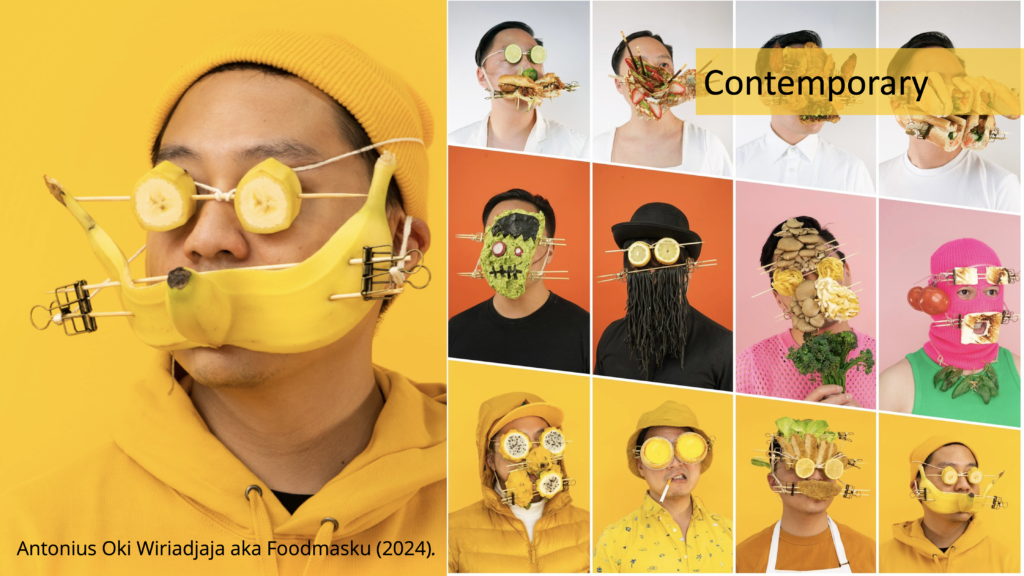
During my presentation titled, “Feeding the Imagination: Exploring the Fusion of Art & Communication in Food Systems,” I delved into the often overlooked yet indispensable role of art and creativity in enhancing messages by making information more accessible, fostering emotional connections, storytelling, celebrating cultural diversity, and inspiring meaningful action towards creating a more sustainable and equitable food future.

It’s easy to get lost in data and statistics, but art offers a unique avenue to engage audiences on a deeper emotional and cultural level. Throughout my presentation, I emphasized how art possesses the profound ability to catalyze change and transformation in our world.

Here are two quotes shared by her students following my lecture:

“The way of using art pieces as an example on how we can integrate multiple ways of knowing into science communication was something new to me. It made me appreciate art even more now since I saw how art can be used in a new way.”

“While there are several other theories and course concepts that I can highlight, I feel strongly about acknowledging the guest lecture that was done on Arts Based Communication. The way we discussed art and communication was really interesting, and it made me realize there are more messages portrayed through art than I thought.”

Thank you, Dr. Sanders, for creating a space where creativity and innovation thrive, and for inspiring others to think outside the box. Here’s to embracing the power of art to transform our world! 🖌️🌟

📒 See some preview slides from my presentation below ⬇

Screenshot 2024-09-06 at 12.38.49 PM


Screenshot 2024-09-06 at 12.34.29 PM


Screenshot 2024-09-06 at 12.35.39 PM


Screenshot 2024-09-06 at 12.35.59 PM

Wednesday, March 20th, 2024

a2ru Emerging Creatives Summit at RIT

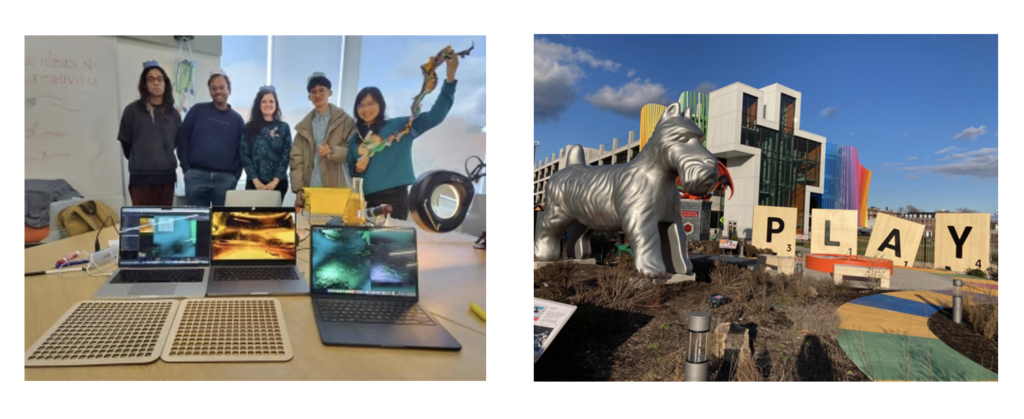
Collaboration is crucial in today’s interconnected world as it fosters the exchange of diverse perspectives and expertise, often leading to innovative solutions that individuals working in isolation may not achieve alone. This past week/end (Mar. 14 -17), I had the privilege of participating in the a2ru Emerging Creatives Student Summit at the Rochester Institute of Technology (RIT) and collaborating with people from around the world. This year’s summit was centered on the topic of PLAY: The Impact on How We Create and Relate to the World.

When we arrived at RIT, we were divided into groups to solve a “problem” within the sub-theme of play. My group was tasked with the sub-theme of New Ideas/Creativity. What did I––more importantly we––learn? The real challenges involved in collaborating on an interdisciplinary team. I have worked on interdisciplinary teams before but never quite in this way. My team consisted of one person from each: machine learning, art education, human-centered digital media design, communication, and new media art.

As a group, we had to work through many challenges, like being stuck in a more nebulous, philosophical state (all of us); being unable to decide on any one idea to move forward with; starting any sort of process to work towards an outcome (i.e., getting stuck time and time again); having our respective disciplinary languages and processes align; forgetting about “play” altogether; struggling to bring ourselves back to that center; working through conflict but coming out on the other end just fine; and so on. One surprising discovery that we all had in alignment was realizing that we do not really permit ourselves to “play” in the sense that children or even other adults do. That we define play differently and we kind of lost play in the midst of our process. A trip to the National Museum of Play helped us to reflect more deeply about play and reincorporate it back into our work.

[L-R] E, Supratim, Emily, Nelson, & Pin; The Museum of Play

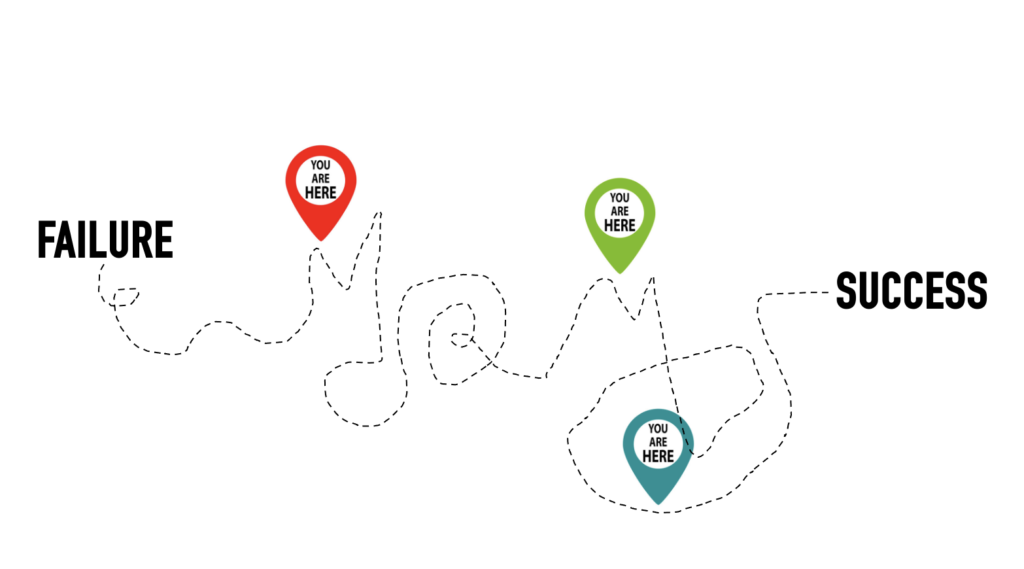
Overall, in a relatively short period of time, we all became very close as we navigated challenges of interdisciplinary work collectively. And we came up with such a fantastic final project to present, which we initially prioritized the outcome as the pinnacle of our project. As we collaborated, however, a profound shift occurred for us all––the outcome became the least important part and our focus shifted from the final product to the collaborative journey itself, and this is where our understanding of each other and synergy truly blossomed. We are people first, and acknowledging our commonalities and our differences is crucial for impactful research. At any one point in time, it would be safe to say our group arrived at success and failure, failure and success, and anywhere in between. If you truly want to learn how a process works, you must try, fail, and try again. It is a very messy process, and it is certainly not easy, but to arrive at higher order solutions, we need to be able to work on interdisciplinary teams.

Screenshot 2024-03-20 at 2.51.54 PM
The Spectrum of Failure & Success [drawing by E. Dustman]

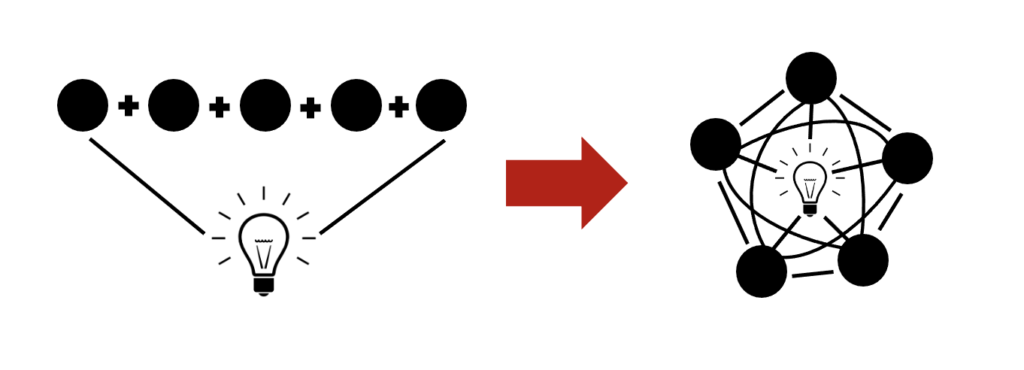
Over the course of the summit, we moved from a model of cooperation to a model of cooperation and collaboration, but it took some time to get there. Together, cooperation and collaboration translate to much more meaningful work and build a strong foundation for successful teamwork and problem-solving in all aspects of life.

Screenshot 2024-03-20 at 3.43.51 PM
Model of Cooperation (L) vs. Cooperation & Collaboration (R) [drawing by E. Dustman]

Focusing on the process over the outcome
cultivated a culture of learning and growth and though difficult a times, promoted adaptability and flexibility.
Ultimately, investing in robust processes lays the foundation for sustainable success and longevity, shaping resilient teams capable of thriving in an ever-changing world.

All in all, I am deeply honored and truly grateful for the opportunity to have been able to participate in this inspiring, stimulating, and fun weekend as we worked through the real-world challenges of collaborating on interdisciplinary teams. I honestly think it has informed each one of us in new and different ways––the languages we speak, how we translate, how our processes are different yet similar, what inclusivity really means, and so much more. It was a growth opportunity for everyone, and I know that each one of us plans to carry our learnings forward in all that we do.

**I am immensely thankful for the opportunity to have attended this event, made possible by the support of the a2RU Scholar Award and the UGA Arts Collaborative: http://arts-collab.uga.edu. This support played a crucial role in enabling my participation, and I am truly grateful.**


Author: Emily A. Dustman
Founder & Director of E-Squared Magazine

Monday, March 11th, 2024

Exploring Mass Production, Talent, and Quality in Art

Andy Warhol, an icon of the Pop Art movement, revolutionized the art world with his unique approach to mass production, challenging traditional notions of talent and the balance between quality and quantity. As we delve into Warhol’s legacy, we are confronted with intriguing questions about the nature of art, creativity, and the ethics of artistic production.

Warhol’s embrace of mass production techniques, such as silkscreen printing, transformed art into a commodity accessible to the masses. Through his famous works like the Campbell’s Soup Cans (pictured above) and Marilyn Monroe portraits, Warhol blurred the lines between high and low culture, elevating everyday objects and celebrities into the realm of fine art. His use of repetition and standardized techniques challenged the romantic notion of the solitary artist, emphasizing instead the role of the factory and the assembly line in the creation of art.

However, Warhol’s approach raises ethical considerations about the exploitation of other talents. His Factory studio was a hub of creativity, where Warhol collaborated with a diverse array of artists, musicians, actors, and writers. While Warhol himself gained fame and fortune, many of his collaborators remained in the shadows, their contributions often overlooked or undervalued. This prompts us to question the power dynamics inherent in artistic collaborations and the ethical responsibilities of artists towards their collaborators. Moreover, Warhol’s emphasis on mass production and quantity over quality challenges traditional notions of artistic excellence. Critics argue that Warhol’s prolific output diluted the significance of individual works, leading to questions about the intrinsic value of art in a world inundated with reproductions. Does the sheer quantity of Warhol’s work diminish its quality, or does it redefine our understanding of artistic merit in the age of mechanical reproduction?

In contemplating Warhol’s legacy, we are compelled to reconsider our assumptions about talent, originality, and the role of the artist in society. While Warhol’s mass-produced art may seem to prioritize quantity over quality, it also democratized the art world, making art more accessible and inclusive. Yet, we must remain mindful of the broader implications of mass production on artistic integrity and the livelihoods of other creative individuals.

Ultimately, Warhol’s legacy reminds us of the complex interplay between art and commerce, individual talent and collective creativity, and the enduring quest for authenticity in an age of mass reproduction. As we navigate these intricate themes, we are challenged to critically engage with the ever-evolving landscape of art and culture, questioning established norms and forging new paths towards innovation and expression. In our digital age, Warhol’s legacy takes on new significance as technological advancements further democratize the creation and distribution of art.

Now, with the proliferation of digital platforms, social media channels, and artificial intelligence (AI) we are presented with both opportunities and challenges, raising important questions about authenticity, originality, and the commodification of outputs of any kind in an increasingly interconnected world.

Friday, February 23rd, 2024

CANVAS FOR CHANGE: The Importance of Art in Conservation Biology

Last month, I had the honor of serving as a guest lecturer for two days for Dr. Todd Levine‘s conservation biology course at Carroll University. My presentation, titled CANVAS FOR CHANGE: The Importance of Art in Conservation Biology, delved into the crucial role of art in the sciences.

On Day 1, we explored the history of art in science, and why we should *all* be incorporating art in science in our modern times. To connect theoretical concepts discussed with the tangible, real-world experience of nature, students explored their surroundings at the Prairie Springs Environmental Education Center.

On Day 2, students learned basic drawing techniques and principles, understanding form, structure, proportions in the context of biological subjects to complete both an artwork and reflection writing.

Being invited to Carroll University as a guest lecturer was a profound privilege, allowing me to exchange insights and interact with students on this vital topic. Such opportunities are invaluable and much needed in fostering meaningful discussions.

And we need more of this! Why?

🖼 Art in science serves as a visual conduit, elucidating complex theories and phenomena, making them accessible and engaging to a broader audience.

🎭 Art in science not only elucidates complex theories but also imbues them with emotion, inviting viewers to connect on a deeper level with scientific concepts.

🔗 By intertwining art and science, researchers can evoke curiosity and awe, igniting a passion for discovery that transcends the boundaries of traditional scientific communication. This fusion of intellect and emotion not only enriches our understanding of the natural world but also cultivates empathy and appreciation for the beauty inherent in scientific exploration.

Friday, February 9th, 2024

Being Bold: What Does it Mean to You?

“Boldness has genius, power, and magic in it.”––Goethe

Here is a portrait of Johann Wolfgang von Goethe by Andy Warhol (1982). At the time, Warhol was reflecting on how the mass media changed our perception of reality. Still today, media campaigns influence people’s perception of reality and misperceptions can act as impediments to social change.

In a world often painted in shades of caution, there’s an undeniable allure to boldness. Being bold isn’t just about making grand gestures or daring moves; it’s a mindset that propels us beyond our comfort zones, urging us to seize opportunities, express ourselves authentically, and navigate life with confidence. It’s about embracing courage in the face of uncertainty and forging ahead despite fear.

Embracing Fear, Embracing Growth

Boldness isn’t the absence of fear; rather, it’s the audacity to confront fear head-on. It’s about acknowledging those fluttering butterflies in your stomach and taking that leap anyway. Boldness resides in recognizing that growth and meaningful experiences often exist just beyond the borders of our comfort.

Think of the moments in history that have shaped the world—the explorers venturing into the unknown, the innovators challenging the status quo, the activists fighting for change. Each of these instances required a level of boldness that transcended the fear of failure or the comfort of the familiar.

The Power of Authenticity

At the core of boldness lies authenticity. It’s about embracing your true self, unapologetically. When you’re bold enough to be authentic, you invite others to do the same. Authenticity breeds connection and creates a ripple effect, inspiring those around you to embrace their uniqueness.

Boldness in authenticity isn’t about being loud or brash; it’s about being honest and genuine. It’s the quiet confidence of staying true to your values, passions, and beliefs, even when it might not be the easiest path to tread.

Navigating Risks and Rewards

Life is inherently uncertain, and boldness involves navigating risks with an understanding that the greatest rewards often lie on the other side of those risks. It’s not about acting recklessly but making informed decisions and calculated leaps of faith.

Being bold encourages resilience in the face of setbacks. It’s understanding that failures are not endpoints but opportunities for learning and growth. Each setback becomes a stepping stone toward future success—a testament to the audacity it takes to pursue something extraordinary.

Cultivating Boldness in Everyday Life

Being bold doesn’t always require monumental actions. It can manifest in everyday choices—speaking up for what’s right, pursuing a passion project, or simply taking a different path. It’s about infusing a sense of adventure and bravery into the mundane aspects of life.

Seek out new experiences, challenge assumptions, and embrace discomfort as a catalyst for growth. Start with small steps, gradually expanding your comfort zone until boldness becomes a natural part of your character.

Living with Boldness

Embracing boldness isn’t about becoming an entirely different person. It’s about unlocking the latent courage within yourself and embracing the full spectrum of human experience. It’s about living life on your terms, unafraid to chase your dreams and create the life you envision.

In a world that often encourages conformity and safety, being bold stands as a beacon of individuality and bravery. So, dare to be bold—embrace your fears, live authentically, take calculated risks, and watch as your life transforms into an adventure worth living.

As the saying goes, “Fortune favors the bold”—and perhaps, so does a life rich with fulfillment, growth, and extraordinary experiences.


Category Archives: Uncategorized

PAINT LOUIS: Breaking Down Barriers

This past weekend marked one of my favorite events of the year—Paint Louis!  Paint Louis is one of the largest graffiti gatherings in the world. This year, artists traveled from as far as Germany, Canada, and Australia to leave their mark on the St. Louis flood wall. The event boasts the Guinness World Record for the “longest […]

On Automation & Filling Gaps

The Great Depression marked a time of widespread hysteria about how automation would lead to mass unemployment. Uhh, sound similar to the headlines today? In the 1930s, American newspapers started publishing about robots and automation. Mass hysteria spread when papers like the Ogden Standard Examiner spread mis/disinformation about a robot named Alpha shooting his inventor […]

AI Revolution: Promise or Peril for Our Data-Driven Future?

Artificial intelligence holds the promise of revolutionizing industries, solving complex problems, and enhancing human capabilities through automation and data-driven decision-making, however, its widespread adoption raises myriad concerns. As AI continues to evolve, fostering interdisciplinary collaboration and ethical frameworks will be essential to harness its full potential while mitigating risks and ensuring it benefits society as […]

How can art help us see science differently?

How can art help us see science differently? 🔬 x 🎨 When we think about science, we often picture data, equations, and research papers. But art has the unique ability to bring these concepts to life, making them more accessible and engaging. In a recent project, I led an engaging art-science workshop designed for all […]

Fellow Academics: Advice for Selecting a Graduate Mentor…

🛎 🛎 🛎 Quality Over Quantity: Selecting an Advisor Wisely 🛎 🛎 🛎 If you were not aware, I am now home…back from Georgia. I made all As in my first year as a PhD student, but my funding stream was switched and was a far cry from what I was told I would be […]

Feeding the Imagination

Last month, I had the incredible opportunity to discuss the intersection of art and food systems communication in Katie Sanders, Ph.D.. class at North Carolina State University, and it was truly an enriching experience for all! 🎨🍽️ During my presentation titled, “Feeding the Imagination: Exploring the Fusion of Art & Communication in Food Systems,” I […]

a2ru Emerging Creatives Summit at RIT

Collaboration is crucial in today’s interconnected world as it fosters the exchange of diverse perspectives and expertise, often leading to innovative solutions that individuals working in isolation may not achieve alone. This past week/end (Mar. 14 -17), I had the privilege of participating in the a2ru Emerging Creatives Student Summit at the Rochester Institute of Technology (RIT) and […]

Exploring Mass Production, Talent, and Quality in Art

Andy Warhol, an icon of the Pop Art movement, revolutionized the art world with his unique approach to mass production, challenging traditional notions of talent and the balance between quality and quantity. As we delve into Warhol’s legacy, we are confronted with intriguing questions about the nature of art, creativity, and the ethics of artistic […]

CANVAS FOR CHANGE: The Importance of Art in Conservation Biology

Last month, I had the honor of serving as a guest lecturer for two days for Dr. Todd Levine‘s conservation biology course at Carroll University. My presentation, titled CANVAS FOR CHANGE: The Importance of Art in Conservation Biology, delved into the crucial role of art in the sciences. On Day 1, we explored the history of art […]

Being Bold: What Does it Mean to You?

“Boldness has genius, power, and magic in it.”––Goethe Here is a portrait of Johann Wolfgang von Goethe by Andy Warhol (1982). At the time, Warhol was reflecting on how the mass media changed our perception of reality. Still today, media campaigns influence people’s perception of reality and misperceptions can act as impediments to social change. […]